Complete Guide to Natural Birth

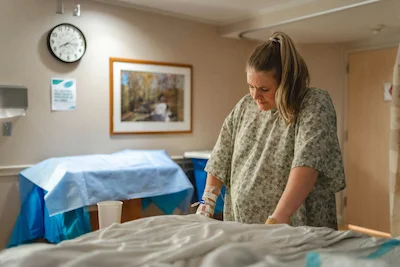
Each birth is unique and special.
Preparing for birth can feel both exciting and overwhelming. This comprehensive guide will help you understand what to expect during natural birth, explore your options, and make informed decisions that align with your birth preferences. Remember that each birth story is unique, and being prepared with knowledge empowers you to navigate your journey with more confidence.
Signs that labour has begun
Recognising the early signs of labour helps you prepare mentally and physically for what is ahead. Here are the common signs to watch for:
- Waters breaking: This can be a sudden gush or a slow trickle of amniotic fluid
- Regular contractions: Unlike Braxton Hicks, true contractions grow stronger, longer, and closer together
- Bloody show: A small amount of pink or blood-streaked mucus as your cervix begins to open
- Lower back pain: Persistent aching or cramping that may radiate to your abdomen
- Feeling of pressure: Increased pressure in your pelvis and rectum as your baby descends
When to call your healthcare provider:
- If your waters break (even without contractions)
- When contractions are 5 minutes apart for first-time mothers, or 7-10 minutes apart for subsequent pregnancies
- If you notice unusual vaginal bleeding (more than just the bloody show)
- If you experience reduced fetal movement
- If you are unsure or concerned about any symptoms
What happens at the hospital or birth centre
Upon arrival at your chosen birth location, here is what typically happens:
- Initial assessment: A midwife will check your vital signs, baby's heart rate, and examine your cervix to determine how far along you are
- Birth plan review: Your preferences will be discussed and noted in your records
- Monitoring: Depending on your situation, intermittent or continuous monitoring of your baby's heartbeat may be recommended
- Birth environment: You might be shown to your birthing room where you can settle in and make the space comfortable
Inducing labour
Sometimes labour needs a little help to get started. Induction may be recommended for various medical reasons:
- Post-term pregnancy: If you are more than 41-42 weeks pregnant
- Medical concerns: Such as preeclampsia, diabetes, or growth restriction
- Waters breaking without contractions starting: To reduce infection risk
Common induction methods include:
- Membrane sweep: A simple procedure during an internal examination
- Prostaglandin: Gel or pessary to soften the cervix
- Artificial rupture of membranes: Breaking your waters
- Oxytocin (Pitocin/Syntocinon): Administered via IV drip to stimulate contractions
Premature labour and birth
Labour that begins before 37 weeks is considered premature. If you experience signs of early labour:
- Contact your healthcare provider immediately
- Try to remain calm and lie down on your left side if possible
- Do not hesitate to call an ambulance if necessary
Management may include:
- Medications: To delay birth if appropriate
- Steroid injections: To help mature baby's lungs
- Transfer: To a hospital with specialised neonatal care if needed
The stages of labour and birth
Natural birth typically progresses through three distinct stages:
- First stage: Begins with early labour (cervix dilating to 3-4cm) and progresses to active labour (4-7cm) and transition (8-10cm)
- Second stage: Pushing and delivery of your baby
- Third stage: Delivery of the placenta
First-time mothers can expect labour to last 8-12 hours on average, though this varies widely. Subsequent births often progress more quickly.
Active Birth Positions: Upright positions like standing, squatting, or kneeling can work with gravity, potentially shortening labour and reducing pain. Movement helps your pelvis open and your baby descend. Listen to your body and change positions as needed for comfort.
Tips for your birth partner
A supportive birth partner can make a significant difference to your birth experience. Here is how they can help:
- Physical support: Massage, counter-pressure, help with position changes
- Emotional support: Encouragement, reassurance, breathing techniques
- Practical support: Keeping track of timing, communicating with medical staff, advocating for your preferences
- Self-care: Remembering to eat, drink, and rest so they can support you effectively
Giving birth to twins or more
Multiple births require special considerations, though vaginal birth is often still possible:
- Positioning: The position of the babies (especially the first) impacts birth options
- Monitoring: More intensive monitoring will likely be recommended
- Location: Birth will typically take place in a hospital setting
- Team: Additional specialists may be present
Discuss your preferences with your healthcare team, but remain flexible as circumstances may change requiring adaptations to your birth plan.
Pain relief in labour
There are various approaches to managing pain during labour:
- Natural methods: Breathing techniques, water immersion, massage, hypnobirthing
- Gas and air (Entonox): A mixture of oxygen and nitrous oxide
- Opioids: Such as pethidine or diamorphine
- Epidural: An anesthetic injected into the space around your spinal nerves
Each option has benefits and considerations. Discuss these with your healthcare provider before labour and remember you can usually change your mind during labour if needed.
Episiotomy and perineal tears
The tissue between the vagina and anus (perineum) stretches during birth, sometimes resulting in tears or requiring a surgical cut (episiotomy):
- Episiotomy: May be recommended in certain circumstances like fetal distress
- Natural tears: Range from first-degree (skin only) to fourth-degree (extending to anal sphincter)
- Prevention techniques: Warm compresses, perineal massage, controlled pushing
- Recovery: Proper hygiene, pain management, and pelvic floor exercises
Forceps or vacuum delivery
Sometimes assistance is needed during the pushing stage:
- Indications: Maternal exhaustion, fetal distress, or prolonged second stage
- Forceps: Metal instruments that cup the baby's head
- Vacuum extraction: A suction cup attached to the baby's head
- Preparation: Usually requires an episiotomy and local anesthesia
These interventions help approximately 10-15% of births and can prevent the need for an emergency caesarean section.
What happens if your baby is breech?
When a baby is positioned bottom or feet first (breech) near term:
- External cephalic version (ECV): A procedure to gently turn the baby
- Vaginal breech birth: Possible in certain circumstances with experienced providers
- Planned caesarean: Often recommended as the safest option for breech presentation
Discuss your options thoroughly with your healthcare provider if your baby remains breech after 36 weeks.
What complications can affect the placenta?
The placenta is vital for your baby's development, but several complications can arise:
- Placenta previa: When the placenta covers the cervix
- Placental abruption: Premature separation from the uterine wall
- Retained placenta: When part or all of the placenta remains in the uterus after birth
- Placenta accreta: When the placenta grows too deeply into the uterine wall
These conditions require medical attention and may affect your birth options.
After the birth
The first hours after birth are a special time for bonding:
- Skin-to-skin contact: Helps regulate baby's temperature and encourages breastfeeding
- Delayed cord clamping: Allows more blood and nutrients to transfer to your baby
- Initial checks: Your baby will receive gentle assessments
- First breastfeed: Support to initiate breastfeeding if that is your choice
- Maternal care: Monitoring your recovery and providing support
Frequently asked questions
The main signs that labour has begun include your waters breaking (either a sudden gush or a slow persistent trickle), regular contractions that become stronger, longer, and closer together over time, a bloody show as the mucus plug passes, and persistent lower back pain that does not ease with position changes. Unlike true labour contractions, Braxton Hicks practice contractions do not intensify or become more frequent.
Call your midwife or maternity unit if your waters break regardless of whether contractions have started, if you notice bright red vaginal bleeding, or if you notice reduced fetal movement. For first babies, head in when contractions are 5 minutes apart. For subsequent pregnancies, call when they are 7–10 minutes apart. If you are unsure, always call. Your team would rather hear from you than have you wait at home.
Labour has three stages. The first stage is the longest. The cervix opens from 0cm to 10cm, progressing through early labour (0–4cm), active labour (4–8cm), and transition (8–10cm), which is the most intense but shortest phase. The second stage begins when you are fully dilated and ends with the birth of your baby. Upright positions such as squatting or kneeling can help the baby descend. The third stage involves mild contractions delivering the placenta, usually within 5 to 30 minutes of birth.
There is a wide range of options. Natural methods include hypnobirthing, using breathing and visualisation to manage sensation, and water birth, where buoyancy in a birth pool provides relaxation and relief. Medical options include gas and air (Entonox), which is breathed through a mask and easy to control, and an epidural, a regional anaesthetic injected near the spine that provides near-total pain relief. Choosing a natural birth does not mean you cannot use pain management. You can combine approaches and change your mind at any point.
Induction may be recommended if you are post-term (41 weeks or more) or have medical concerns such as pre-eclampsia. Methods include a membrane sweep, where the membranes are manually separated to release hormones; a prostaglandin gel or pessary to soften the cervix; and an oxytocin drip to trigger contractions. Your healthcare team will discuss which approach is most appropriate for your situation.
In around 10–15% of births, a doctor may use forceps or a vacuum (ventouse) to help the baby out during the final pushing stage. This is typically recommended in cases of fetal distress or maternal exhaustion. Both instruments are safe and used by experienced obstetricians. The priority is always a safe outcome for mother and baby.
The golden hour refers to the first 60 minutes after birth, which are particularly important for bonding and recovery. Placing your baby directly on your chest for skin-to-skin contact helps regulate their heart rate and temperature. Delayed cord clamping, allows more nutrient-rich blood to transfer to the baby. Your baby is also often most alert and ready to breastfeed during this window. It is worth including your preferences for the golden hour in your birth plan.
Final thoughts
Every birth is a unique journey. While having a birth plan is valuable, remaining flexible and open to changes is equally important. Trust your body's wisdom and the expertise of your healthcare team.
Remember that the ultimate goal is a healthy mother and baby. How you get there might take unexpected turns, but each birth story is valuable and worthy of honour. The way your baby enters the world is just the beginning of your parenting journey.