The ANEF Technique
Anterior Non-Episiotomy Forceps Delivery
A pioneering approach to forceps delivery developed by Mr Myriknas that works with your body - giving the perineum time to stretch naturally, reducing the risk of severe tearing, and avoiding episiotomy wherever possible.


What is the ANEF technique?
ANEF stands for Anterior Non-Episiotomy Forceps - a name that tells you exactly what it does. The word “ANEF” is also drawn from the ancient Greek ἄνευ, meaning “without” - a nod to its core aim: delivering your baby without the need for an episiotomy (surgical cut) whenever it is safely possible to do so.
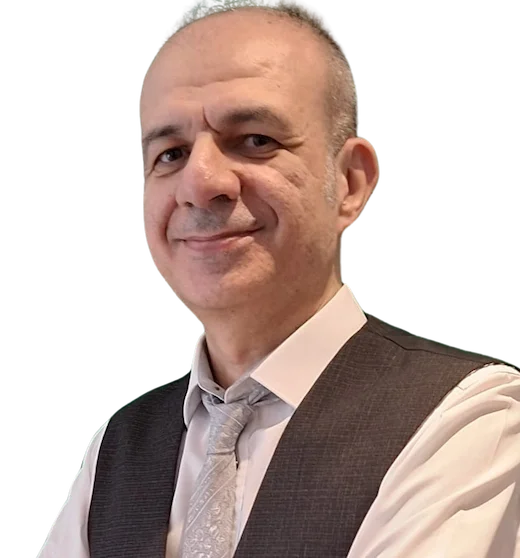
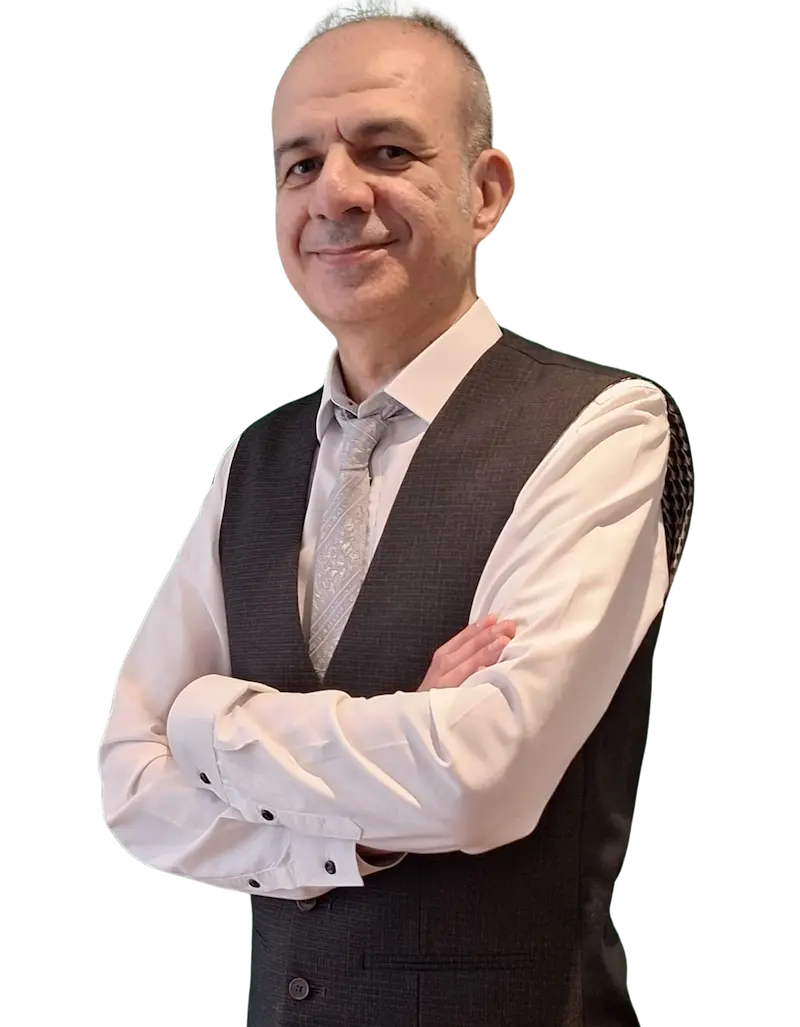
The technique was developed and published by Mr Stelios Myriknas, Consultant Obstetrician and Gynaecologist at Chelsea and Westminster Hospital. It has been peer-reviewed and published in the Journal of Pelvic, Obstetric and Gynaecological Physiotherapy (2018) and referenced in The Obstetrician & Gynaecologist (2020). The results from 360 consecutive deliveries speak for themselves.
Why does it matter?
Forceps are an important tool when a baby needs help being born - for example after a long labour, if you are too exhausted to push, or if your baby shows signs of needing to be born quickly. However, traditional forceps deliveries have historically been associated with a higher risk of serious perineal tears, including injuries to the anal sphincter (known as OASIS - obstetric anal sphincter injuries). These injuries can cause significant pain, and in some cases long-term bowel and bladder issues.
The standard approach has been to routinely perform an episiotomy - a surgical cut - to make space. Yet research, including Mr Myriknas's own published work, shows that routine episiotomy does not reliably prevent serious tears and may in fact contribute to them. His ANEF technique takes a fundamentally different approach.
“The ANEF or natural forceps delivery significantly reduces the rate of serious perineal injury by refining the human factor and improving operator practice.”
Myriknas S, Papadakis K. Journal of Pelvic, Obstetric and Gynaecological Physiotherapy, 2018
How is it different from a traditional forceps delivery?
Three things set ANEF apart from conventional technique:
- It follows the natural path. The forceps are guided to closely mirror the curve that your baby's head follows naturally as it moves down and out of the birth canal. This means the instrument works with your body, not against it.
- It gives the perineum time to stretch. Rather than delivering the head quickly, Mr Myriknas guides the head out very slowly - over one to two minutes at the critical moment - while asking you to breathe and blow gently rather than push. This gives the tissue around the vaginal opening adequate time to stretch and accommodate your baby's head, greatly reducing the likelihood of serious tearing.
- It avoids applying force against resistance. The technique uses a specific upward elevation of the forceps handles at the moment of crowning, which reduces the strain on the perineum and allows the front of the vagina to take the strain instead - where tissue is naturally more resilient.
What do the results show?
In a series of 360 consecutive ANEF deliveries carried out by Mr Myriknas over four and a half years, the rate of serious sphincter injury (OASIS) was 1.9%, compared to the published average of 8.9% with traditional forceps and routine episiotomy. That is a reduction of more than 75%.
- 28% of women had an intact perineum - no tear at all
- 29% experienced a minor first-degree tear (superficial, heals quickly without stitches)
- 41% had a second-degree tear (requires a small number of stitches, recovers well)
- Only 1.9% experienced a serious sphincter injury, versus 8.9% in comparable populations
These outcomes are particularly meaningful because all 360 deliveries were in first-time mothers (primiparae) - a group at higher baseline risk of perineal injury during assisted delivery.
What does this mean for you?
If a forceps delivery becomes necessary during your labour, you want it to be performed by someone who has not only mastered the technique but developed it. Mr Myriknas brings both the expertise and the pioneering approach that gives you the best possible chance of a gentler delivery - one that protects your body and supports your recovery.
Many of his patients describe second-degree tears in situations where a traditional approach would typically have resulted in far more significant injury. Several describe no tearing or episiotomy at all, even after very long labours of 40 hours or more. The ANEF technique does not guarantee a particular outcome - every birth is different - but it meaningfully shifts the odds in your favour.
Is a forceps delivery something to be concerned about?
It is natural to feel apprehensive about the idea of an assisted delivery. However, when forceps are used by an experienced specialist with the right technique, they are a safe and effective option that can prevent the need for an emergency caesarean section at full dilation - a procedure that carries its own significant risks.
Mr Myriknas is committed to clear, calm communication throughout. During an ANEF delivery he keeps you informed at every stage, guiding you on when to push and when to breathe and rest. His patients consistently describe feeling supported, reassured, and in safe hands - even during long or complex labours.
About the published research
The ANEF technique has been presented at national conferences and published in peer-reviewed journals. Mr Myriknas continues to advocate for wider adoption of the technique as part of enhanced recovery pathways in obstetrics. His work forms part of a broader evidence base for reducing perineal trauma during assisted delivery.
- Myriknas S, Papadakis K. Anterior non-episiotomy or natural forceps delivery: refining the technique and improving communication as a way of reducing obstetric anal sphincter injuries in instrumental deliveries. Journal of Pelvic, Obstetric and Gynaecological Physiotherapy, Spring 2018; 122: 50–55.
- Myriknas S. Optimising non-rotational forceps: the anterior ninety-degree elevation forceps (ANEF) approach. The Obstetrician & Gynaecologist, 2020.
Frequently asked questions
Not necessarily. Forceps are only used when there is a clinical reason - for example if your baby needs to be born more quickly than pushing alone allows, if you are exhausted after a long labour, or if your baby is showing signs of distress. Many women give birth without any instrumental assistance. Your birth plan will be discussed in full during your antenatal consultations.
The ANEF technique is used for non-rotational forceps deliveries - specifically where the baby's head is in a favourable position in the birth canal. Whether it is appropriate for you will depend on your individual circumstances on the day. Mr Myriknas will always assess the safest approach for you and your baby, and will discuss his recommendations with you clearly.
The aim of the ANEF technique is to avoid episiotomy wherever it is safely possible to do so. In some situations, an episiotomy may still be clinically necessary - for example if the baby needs to be born very quickly. However, the ANEF approach has been shown to dramatically reduce the rate at which episiotomy is required, as well as the severity of any tearing that does occur.
Three key differences: the forceps follow the natural curve of the birth canal rather than applying straight traction; the head is delivered very slowly at the critical moment - over one to two minutes - to allow the perineum to stretch gradually; and the handles are elevated at 90° at crowning, redirecting strain away from the perineum. Together, these refinements significantly reduce the risk of serious tearing.
All deliveries are performed at The Kensington Wing and The Chelsea Wing, Chelsea and Westminster Hospital, 369 Fulham Road, London SW10 9NH - a specialist maternity unit with comprehensive facilities for private birth.
Absolutely. Birth planning is a central part of antenatal care with Mr Myriknas. He will discuss your preferences in detail, explain what different scenarios might look like, and answer any questions you have about assisted delivery. A complimentary initial meet and greet consultation is available for new patients.
Appointments & Enquiries
To make an enquiry or request an appointment, please complete the form below and we will respond within 24 hours.